Sunday, 26 February 2017

Paris bulletin 2 2017

Because Paris is such a compact city you can visualize it as a kind of giant spider, although one with more than eight legs. The legs radiate out from the centre, roads and train lines transporting over 2.8 million citizens in and out of the city every day. One of them, the RER line D, carries roughly 550,000 passengers per day from the north-east outer suburbs (furthest point is Creil 28 miles from Paris in the valley of the Oise) right down as far as Malesherbes. To get to Boussy St Antoine, my usual destination on that line, you travel past the gare de Lyon and through the crossing points of Maisons Alfort, Villeneuve Triage and Villeneuve St George, each of those stations surrounded by a vast acreage of train tracks.

On the outward journey the Seine is to the right, sliding sleekly by, a very different looking river from the one that spread itself across the valley a century ago.  

the Seine at Villeneuve St Georges, Théodore Rousseau (1812 - 1867)

It doesn’t take long to get past the high-rise apartments, the distribution centres, the SNCF maintenance hangars and the crazy criss-crossing tracks and then you find yourself travelling alongside les pavillons de banlieue sitting snugly in their minuscule plots of land. There are patches of woodland, occasional glimpses of other smaller waterways, catkins on the hazels along the line and once in a while clumps of snowdrops up the banks.

Boussy St Antoine is just over 16 miles from Paris but as soon as you’re away from the train station you could be in any of France’s semi-rural backwaters. The air is clearer, the birds sing louder, there are horses in the fields and some of the copses are already thick with the green of the little wild daffodils we will see being sold in tight bundles outside metro stations any day now.


The river Yerres at Boussy St Antoine

‘La Chapelle est un sas’, says Hélène, a member of les Quartiers Solidaires association supporting refugees in our neighbourhood. I look up the word in le Robert dictionary, not for what it means – these days it’s most often used of the airlock between two separate spaces, in for example a spacecraft or submarine – as for its etymology. Dictionaries are wondrous objects to use, even if they can be tedious to write.

Sas – nom masculin; latin médiéval setacium; latin classique seta ‘soie de porc, crin’. pièce de tissu (crin, soie, voile) servant à passer diverses matières liquides ou pulvulérantes  From that early meaning  of a sieve or filter it came eventually to denote the calm area, between an inner and  outer harbour, between two locks on a canal, like a buffer zone.

What Hélène says feels right: this less than half a kilometre square area around metro la Chapelle is definitely a space in between, in between exile and acceptance, arrival and departure. I can report for those who expressed an interest after the last bulletin, that our little boat, the supermarket trolley, is still afloat in the sas of our streets and still well-filled, thanks to the generosity of the riverains and local shops. If only the same could be said for the main centre d’accueil just to the north at Porte de la Chapelle. It is ‘saturé’ and the police action there marked by aggression both towards the refugees waiting outside and the local volunteers, some of whom have been given fines for feeding hungry men.

 
queuing outside the centre d'accueil Porte de la Chapelle
Elsewhere in Paris and with a different focus, the Vermeer exhibition at the Louvre is underway (on until 22 May only). If you’re determined to see it, go early. You will be given a time slot with your ticket but you may well have to wait for longer. You could of course decide to forego the closer look at paintings you already know (how close you get will obviously depend on how busy it is). You could spend the time you waste standing in line in the Richelieu wing instead, in half-empty rooms among the hundreds of other Dutch masters the Louvre owns. Less to pay and more leisure to look.


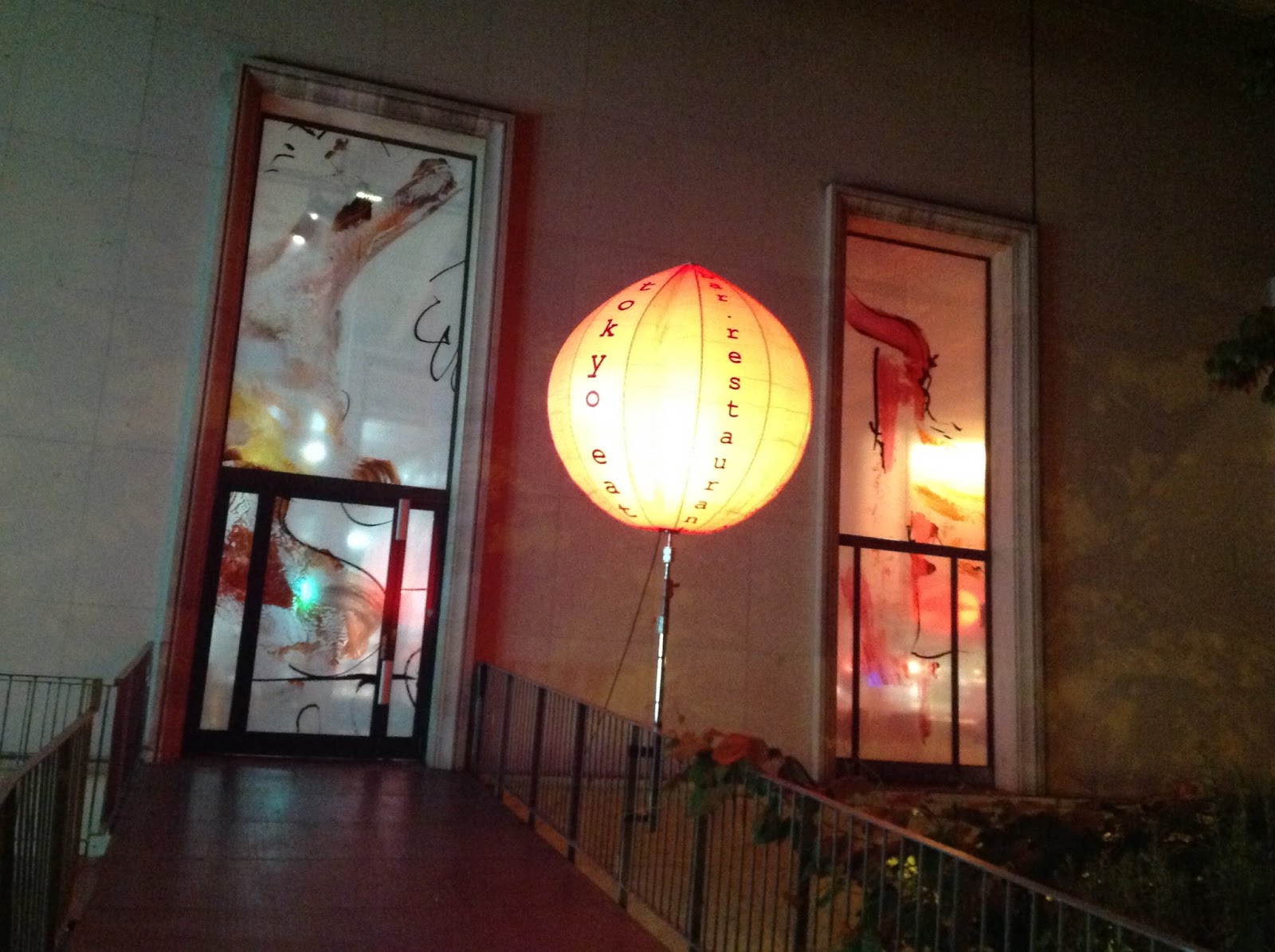
I haven’t yet been to see Abraham Poincheval who is locked away this week inside a rock in the Palais de Tokyo (until 2 March). Will I go? I’m not sure there’s a lot an observer can do with the outside of the stone. The experience seems to me to be a very private one. I do like the idea he’s going to follow being ‘rocked-in’ (my word not his for this 'stunt') by sitting on some hens’ eggs. The time of duration of that next happening is obviously less certain, hens’ eggs taking anywhere between 21 and 26 days to hatch out.

Here is Poincheval in one of his previous vessels, a giant bottle complete with solar panels to supply him with power for his ventilation system. 


Another of his exploits last autumn was to sit for a week like a nesting stork on top of a mast 'to mediate and write on questions of perspective'. 


Abraham Poincheval outside the gare de Lyon, Paris on his mast


I was never so glad as now to live in a city where art in all its manifold expressions, its boundless exuberance, is still breaking taboos, dismantling walls, opening minds.

Walls

                                          Without regard, without pity, without shame,
                                           massive and high all around me they've built walls.

                                           And I sit here now and give up all hope.
                                           I have no other thought: this fate gnaws at my mind;

                                           because I had so many things to do out there.
                                           Ah, when they constructed the walls, how could I have paid no
                                           attention.

                                           But I never once heard a noise or any sound come from the builders.
                                           Imperceptibly they've shut me away from the world out there.

                                           Constantine Cavafy


Sunday, 29 January 2017

Paris Bulletin no. 1 2017


7 January 8.45 am. Helping at le Café Solidaire on the Place Pajol
The thermos is full of hot tea, the baguettes are chopped into pieces and spread with chocolate. Four refugees approach, only one out of the four is wearing gloves. None of them has hats. It is minus 3 degrees Celsius.
‘Tea? Chai?’ A nod. ‘Sugar?’ Another nod, three fingers held up. ‘Bread with chocolate?’ ‘Yes, thank you.’ He takes the plastic cup and bread and a packet of paper hankies, goes and squats by the wall. Paper hankies, maps of the city, maps of the metro, bananas, boiled eggs and yoghurt if they can get them. 

The line gets longer. There’s no more chocolate spread, but down in the bottom of the chariot there’s a pot of honey a well-wisher has given.
‘Honey?’ I point to the label. The boy nods, smiles. ‘How do you say honey in…?’ He’s Eritrean, what language does he speak? Of course, Amharic.
‘Mari’ he says. ‘Me mari.’ He points to his chest and grins. I get the joke.
‘Good, me ‘honey’,’ I reply.
‘Sweet,’ he says. And so it is.
**
A day later and I am there again. I talk to Rachel. Her face is twisted with anxiety. She arrived in Paris with her daughter, Aden aged 4, two days ago.
‘I came across the sea from Libya, in a boat, very full. I was afraid.’ Rachel is a widow. Her husband died when Aden was ten months old – ‘not killed,’ she adds quickly. ‘A natural death but he was young. Too young.’
Both her parents died too. She has left no family in Eritrea but she has no relatives to turn to in Paris either. Still she didn’t hesitate. ‘In my country life is brutal.’ She says it with conviction. I ask her where she learnt the word. 'I had to speak English in Lebanon where I worked before my daughter was born. I was a waitress.' 
Last night she slept in a hotel but she doesn’t know where she’ll be tonight. ‘Perhaps with them,’ she says, gesturing at a group of young men who are rolling up their sleeping bags.
‘What do you want now you are here?’ I ask.
‘For me, nothing. For my daughter, everything. To learn ... to read ... to go to school.’
‘You must want something for you too?’
‘A safe place to sleep. To make a meal. To feed my daughter.’

27 January 8.35 am. Waiting to go as an accompanying parent on a school trip to the Pavillon de l’Arsenal
From where I am standing in the entrance to the school I can see what’s happening on the other side of the street. There’s a pile of duvets, blankets and sleeping bags on the pavement. 

They are hiding a group of young Eritrean refugees. It’s not as cold today as it has been for the past fortnight but they’re in no hurry to emerge, and who could blame them? They have the warmth of each other as well as the covers. Unfortunately for them the police are here in numbers, strutting about, all set to clear them off.  Several of the young men are already on their feet, hurriedly pushing their shoes on, grabbing their bags. We know by now what happens to anything they can’t carry because we’ve seen it many times before: duvets and sleeping bags, no matter their state, will be scooped up and tossed into one of those huge waste bins or straight into a rubbish van. This time at least we’re spared the cleaners in their full-body white overalls with their high-pressure hoses at the ready. It’s something to see someone’s only warm cover reduced to a sopping heap by a jet of cold water. ‘Nettoyage,’ they say. They don’t add the word ‘ethnique’ but they might as well. The school janitor is watching too.
‘Ils les embarquent. Ils les mènent au commissariat, Une fois là-bas ils les relâchent. C’est un recyclage perpetuel. C’est complètement con.’
10.30 am. 29 January I am in the commissariat on the rue de la Goutte d’Or to report the theft of my wallet
            A young woman appears in the lobby between the outer and the inner doors. She  can’t see how to open the door. I help her. She is distraught. The station is already busy. The officer on duty asks her why she’s there and she collapses.
C’est mon voisin. Il me dit ‘sale juive’ tout le temps.’ By now she’s crying so hard it’s impossible to make out the rest.
‘Calmez-vous, madame et asseyez-vous. On va s’occuper de vous.’
**
            I am one of the lucky ones:  the events I’ve described are a small part of my life. In between I have been to the cinema twice, to see Paterson and Toni Erdmann, to the theatre once, to see Jacques Gamblin and a jazz group, to the Louvre twice, once to visit the Collection Tessin and the second time to do some drawing and to the Pompidou to catch the Magritte before it closed. I have eaten good food with friends, drunk lots of cups of coffee and one or two glasses of wine, bought a couple of things I didn’t really need in the sales, made eight pots of marmalade, knitted four pussy hats and marched with thousands of men and women from Trocadéro to the Champs de Mars. And I’ve been in and out of various bookshops:


There are over 350 independent bookshops in Paris and 75 municipally-funded lending libraries. What wealth! And what better to way to end the first bulletin of the year?

             ‘To learn … to read … to go to school.’ Not for the first time it’s a refugee who reminds us of what really matters.

Saturday, 31 December 2016

Paris bulletin 8 2016

Paris is ending the year dans la grisaille, for which there is no very satisfactory single word in English. The cross on the top of the spire of the église St Bernard up the road from my sitting room window hasn’t properly emerged from the murk all day.  People have been scurrying along the street like figures in a Lowry painting, their minds perhaps on the final purchases they need for their party, the jar of foie gras, the plateau de fruits de mer, another bottle of prosecco. When I went past Monoprix there was a queue yards long waiting at the fishmonger’s stall outside. Prawns (flown in from India) had been reduced from 16 to 12.50 euros a kilo. There were couteaux, bulots, fines de claires, coquilles St Jacques, homards, langoustines and I don’t know what else. Multiply that stall by all the others across Paris alone and you begin to appreciate how thoroughly the seas and the fish farms have been plundered for le saint Sylvestre. 

Picture next, less than a quarter of a mile from that plenitude, a small square, a couple of benches, a single scraggy tree and a heap of coloured bedding, sleeping bags, blankets, backpacks. This is where twenty, maybe more, young men will have huddled together through the night to keep the worst of the cold out of their bones. They are some of the young men and boys who line up each morning, blowing on the tips of their fingers, hugging cold hands under armpits while they wait for their cups of tea or coffee and their chunk of baguette and chocolate spread.

I've joined an association, les Quartiers Solidaires, a group of mostly forty-somethings with children at the local schools, who take it in turns to provide a makeshift breakfast service to the refugees and other homeless people who sleep on our pavements. I’m still learning the routine because I haven’t been doing it for long. I don’t yet even recognize most of those who come. So far I’ve only seen two women and two young girls, one of them with a very small baby. There are barriers of age, sex and most of all language between us. The group changes constantly as well. People get lifted by the police or find another, safer place to pass the night or just move on.

You could say it’s insulting to offer hungry men day-old bread and weak tea; it’s shaming or scandalous that the city doesn’t do more, but in the absence of something better this is definitely better than nothing. The smiles are real on both sides of the table and there is warmth in more than the plastic cups of hot liquid.

There are simple practical steps to follow to do the breakfast. You make sure the chocolate spread is kept somewhere warm overnight so you can spread it more easily once you’re out on the cold street. You boil lots of pans of water, fill the thermoses and the urn, call in at the baker’s along the street to collect yesterday’s unsold baguettes and viennoiseries, load everything onto two trolleys and trundle these round the corner to set up the tables for the makeshift buvette on the place. The queue forms instantly and for the next hour or two you’re busy pouring tea and coffee, cutting bread and making sandwiches. In the occasional lulls you see acts of kindness by passers-by as well as occasional outbursts of hostility. Kindness is a woman handing out a bag full of woollen gloves, another a thick scarf, another a two big packs of paper hankies. Hostility is a middle-aged man screaming down the street, ‘Madame, vous avez créé un ghetto! On devrait les chasser tous! C’est de la merde.’

Down at the Champs Elysées there will have been other long queues outside le Grand Palais but it shut at 6 o’clock this evening and won’t open again until tomorrow when it will stay open right through till 2 am. It’s not the Mexican art exhibition that’s drawing the crowds but ‘the world’s biggest indoor ice rink’.  When we went a few days ago it was still light but by six o’clock the daylight had fled, the lasers came on in the glass roof and the whole place became a magical whirling, spinning universe of light and sound.


There are so many wonderful exhibitions to see at present it’s hard to choose which to mention but two not to miss are the Icons of Modern Art, the Shchukin Collection at the Fondation Louis Vuitton on until 20 February.  Magritte, la Trahison des Images is at the Pompidou and ends on 23 January.


Here’s wishing you many wonderful new experiences in 2017. One of my new year’s resolutions is to turn down the sound - pay less heed to the chatter and the prophets of doom on both sides of the Atlantic.


Tuesday, 27 September 2016

Paris bulletin 7 2016

I've been in Paris for nearly a week now and the soft light of south-west Scotland, its green fields and wide open moors already feel quite remote. The sun has been shining out of a cloudless sky, although no longer producing the soaring, energy-sapping temperatures that made Paris so unbearable this summer. I was gone before Paris Plages was fully set up and the sand, deckchair and buvettes have long since been dismantled. This weekend has been la Fête des Jardins however, so there have been other entertainments and attractions in all the public gardens.

Our local park, le jardin d’Eole, had a collection of domestic animals in enclosures, a mini city farm I suppose you could say (bearing, it must be admitted, little or no resemblance to the way we really manage the care of the animals whose meat, milk, eggs and skins we consume. I think of my local farm in Scotland where the cows never go outside from one month to the next, or the chickens we eat, allowed at best 10 weeks of life …).


   Sign of the times? New burger bar on the Champs-Elysées. 250,000 ways of eating a burger - just don't ask how the beef was raised, killed and transported, i.e. welcome to consumer choice in the 21st century. 

There were a couple of very large geese cackling about, some sheep in pens and rabbits in hutches and sundry bales of straw to lend an air of authenticity. All that was missing to complete this picture of bucolic harmony was a yokel with a hat on the back of his head and a straw poking out of his mouth. Nice for the kids though, a lot of whom probably thought the geese were just big ducks and couldn’t have told you beforehand how to tell a sheep from a goat.

On the second day I got back I saw for the first time ever a young refugee stripped down to his underpants having a ‘full-body’ wash in the canal that runs along the length of the garden. It hardly merits the word canal being only five feet wide and less than two feet deep and full of bulrushes, reeds and other water-loving plants. However its waters are constantly replenished so it’s not a bad place to get clean if you haven’t access to the public baths. I didn’t know then that the organisers were planning on bringing in animals for the Fête but I was already thinking about the difference in how the wealthy West views its garden spaces and how someone from a low-rainfall, dusty country might view them, or the animals and birds that inhabit them. We have lots of ducks on that little canal. I haven’t heard of any dead ducks being roasted over a camp fire yet but the time may come.

It was a busy weekend for the Mairie de Paris since Sunday was also Paris’s annual car-free day. It looked from my window as if the edict had had more impact this year but it was hard to be sure since the street is generally quieter on a Sunday. I decided to check out one of the pedestrian hot-spots and took the metro to the Champs-Elysées in the afternoon. There I joined the thousands on foot and bike who had sole use of the 10-lane highway for something like 7 hours from 11 am – 6 pm.


                            The Champs-Elysées at 3 pm on Sunday 25 September 2016

The purely pedestrianised part of the road stopped at the rond-point where there was a heavily armed police presence (you were also frisked at the barriers at both ends). Outside the pedestrian limits the only traffic was buses and taxis and those bicycle taxis you see more and more in that part of town. Concorde was a vast expanse of emptiness. It was so safe hundreds of small children were also out on their bikes. It was a joy to see, most of them cycling merrily along - some very little ones wobbling precariously - all the way across the place de la Concorde and up the rue Royale!


                                                     Place de la Concorde, same day

Long shadows on the places, fountains playing, the asters and the begonias still in full bloom; outside my open window I can hear the voices of the women sitting out in the courtyard next door, the rippling notes of a flute, the distant blare of a siren. That’s Paris on a warm September day.


Blue skies and butterflies - the sun also shines in Scotland!


Saturday, 16 July 2016

Paris bulletin 6 2016


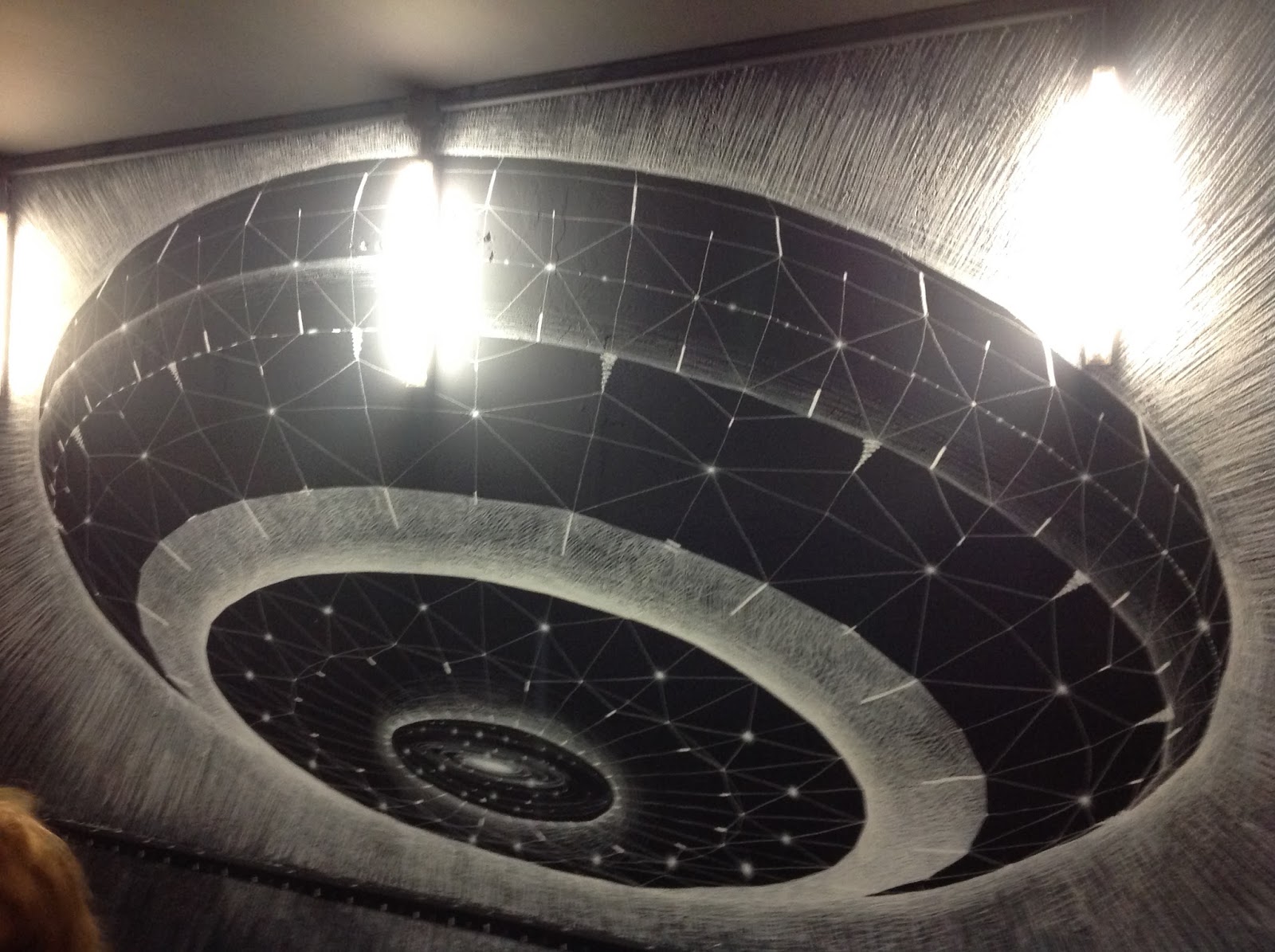
Le Palais de Tokyo is one half, the west wing, of a huge complex on the avenue du Président Wilson, just down the hill from Trocadéro. Since the whole wing was finally brought into use in 2012 it is now the biggest centre for contemporary art in Europe. Unlike most Paris museums and art galleries it holds no permanent exhibitions of any kind. Its function is to give space to a rolling programme of temporary installations and works. Currently and until September one of the main offerings is a labyrinthine exhibition, Rester vivant, by novelist/poet/photographer Michel Houellebecq.


When it was first built in 1937 the plan was to use what we now know as le Palais de Tokyo as the national museum of modern art. However the mandarins reckoned without the war and the collapse of France. In 1939 most of the paintings had to be packed up and carted off in a southerly direction in an effort to keep them out of Nazi hands and in 1941 the basement of the building was taken over by the Gestapo who needed somewhere to store the hundreds of pianos they’d stolen off Jews who had fled or been arrested. That bit of history is reflected in one of the offers the Palais makes to its visitors: a guided visit round the Lasco Project, the only exhibition which has gone on non-stop since 2012.

Greek street art

You have to do a guided visit because the Lasco artwork you see isn’t in any of the main exhibition spaces. It is hidden away underground, in the corridors and stairways behind the public spaces of the Palais. A staff member has to get you through doors that are otherwise locked. Lasco is street art and in keeping  with the form and its culture it is underground and secret.  You’ll find work by artists such as Philippe Baudeloque, (www.baudeloque.com), JR (jr-art.net), DRAN and others whose names I ought to know but don’t. (Checking all this out after my visit I happened upon www.fatcap.com. I recommend it if you don’t already know it. Street art, in all its guises, is one of the more positive developments of global urbanization – definitely the most in-tune with and reflective of the problems it raises anyhow.)


                                                                     work by DRAN


work by Philippe Baudeloque

Coming back to those pianos, there is a part of the Palais which even the visitors to the Lasco project aren’t allowed into. All you can see is a short video of the secret spaces below you in the true basement of the building, where the wartime stolen pianos were kept: a handful of men working to commemorate that time. Water drips from the low ceiling, the candles they are using for light flicker and dim. 


photos taken from the video of the basement


It’s 10 o’ clock in the evening when I do that visit (visits are that time every day and at midday on Wednesdays, Saturdays and Sundays. The Palais is open from midday till midnight every day except Tuesday). When I come out at ten to eleven I find the street has filled with people. Wherever you can catch a glimpse of the Tour Eiffel there’s a crush of people waiting for the 14 juillet fireworks. I decide to stay and see them too. I wouldn’t have come out specially but now I’m here why not?


I’m sucked into the crowd, scrunched up against a drunk young woman who’s obviously got something stronger than water in the bottle she’s clutching, and an Arab-speaking family, one child already asleep and mum looking like she’d rather be anywhere but here but dad’s got his camera out so they have to stay. The crowd is good-humoured and patient. The Tour Eiffel glitters and sparkles, takes on bleu, blanc, rouge and then goes dark. Fire runs up the sides, falls away, flares out again. Flowers of colour and light blossom overhead. 


fireworks seen from the musée d'art moderne de la ville de Paris

The bangs get louder and faster. I watch a little while then squeeze my way through the press and set off back to Etoile and the Champs Elysées. The giant flag billows under the Arc. There’s music, laughter, dancing even. No one knows. Not yet.

Monday, 20 June 2016

Paris bulletin 5 2016


Out and about in Paris last week with my friend, Pamela Shandel, who took the photos.
  
Pamela's cappuccino et petite madeleine

soldiers consult their map (!) in the courtyard of le centre de danse du Marais

in the courtyard at 41 rue du Temple, watching un cours de flamenco

collage of writers at les cahiers de Colette bookshop on the rue Rambuteau

Brioches pralinées at Pralus on rue Rambuteau

laying the pavés outside le Forum des Halles

heading to the play park at Forum des Halles


It’s that time of year again – the season of dark red cherries, apricots, piles of green and gold mangoes outside the Indian shops on the rue du Faubourg St Denis; a time of reckoning too – the bac started a week ago and from now on until the end of the month there’ll be one spectacle de fin d’année after another, parents wielding cameras and phones, quite a few of them hardly watching at all in their urge to record their child’s performance under the lights. I take my place in the queue to find seats for two of my grandchildren’s shows, the first at the Bouffes du Nord, the second at the Théâtre de Ménilmontant, both of them really excellent, a huge tribute to the work done by children and adults.

I can’t tell you who’s still in and who’s already out of the Euro 2016 competition because I’m not interested in football. What I can say is that since the first match kicked off I have seen enough loutish behaviour on the streets of Paris to last me a very long time. The clusters of tee-shirted men displaying that mix of mouthy bravado and panicky fear make me thankful I’m a woman. Lord of the Flies has been in my mind more than once.

I know the footballing louts are ‘a tiny minority’ and they are by no means only English and Russian, but every time they elbow bystanders out of their way, slap someone round the head, bawl their slogans and tribal songs in the metro, wave their flags in rival supporters’ faces, toss their empty beer cans on the pavement, all of which acts I have personally witnessed, they put another layer of scum on the surface of social life. The story that is circulating of a crowd of English supporters forcing a seven year-old boy begging on the street to drink from a can of lager before they gave him money may well be apocryphal but I don’t find it much of a stretch after some of what I’ve seen.

I know this is a Paris bulletin but exceptional circumstances demand exceptional responses. Two events have dominated the UK front pages this past week: the murder of Jo Cox and the referendum. Both resonate strongly for me here in the 18th arrondissement where yet another camp of refuges has been established round the corner from my flat on the esplanade Nathalie Sarraute. This after the recent clearing of the camp outside the jardin d’Eole where by the time it was cleared there were 1,300 migrants and refuges from various African and Middle Eastern countries, living in conditions of the most appalling squalor and degradation. I am told that the police have now cleared refugee camps in this area 23 times in the past year

Right at this minute the rain is pouring down as it has done with monotonous regularity in both May and June. Hard to imagine what it feels like to lie, (most of the tents are too small to allow you to sit up comfortably), listening to the rain beating down on a thin layer of nylon above your head when it’s not trendy urban camping you’re about, with a hot shower waiting and a change of dry clothes in the cupboard (cf. a recent piece about rooftop camping in Brooklyn in one of the broadsheets).


Another of the effects of these repeated clearings is that in our neighbourhood whole stretches of public space have been cordoned off by the authorities. They include parks as well as pavements and this in an area which is already short of open green spaces for relaxation and play.

Fortunately there are other responses. La cohabitation is a fact of life here. I am proud to live in this area - one of the poorest and most overcrowded of the city - where incomers are seen in their singularity however many they are, where the inhabitants don't stint their efforts to help through the quartiers solidaires network and others like it. 

I posted my ‘IN’ vote a while back. You can stay stuck in inaction and a sense of powerlessness or you can do whatever you can, little as it may be, to counter those whose only solution is to pull up the drawbridge, batten down the hatches or head for the hills… I read a post from some British man yesterday which said that choosing which side to vote for in the referendum is ‘a difficult decision’. Really? Who in their right mind would want to be immured in any kind of fortress with the likes of Farrage or Johnson?


mes géraniums qui font face au mauvais temps


Tuesday, 24 May 2016

Paris bulletin 4 2016

We may be in the End Times after all. The rain seems to suggest so. I see no sign of any ark-building however, although plenty of sodden tents. Round the corner from my flat something like four hundred migrants are camped on the same patch of land they used last year by the jardin d’Eole.

I took my own advice to heart after my last bulletin. I’m cultivating what passes for a garden in a tarmac-covered backyard, in tubs of course, all flowers except for one tub:  radishes. I thinned them out yesterday and they are beginning to swell although I doubt they’ll have much zing about them if the sun doesn’t shine soon.  

Before the skies opened and the rivers began to fill I went over to Truffaut, Paris’s biggest inner city garden centre, and ‘animalerie’. The place was heaving with Parisians intent like me on filling their window boxes and creating des balcons fleuris.

‘On a du solieil au balcon jusqu’à 14 heures. Qu’est-ce que vous me conseillez?’ 
          The Panthéon a fortnight ago - blue skie, hot sun and flowering chestnuts.

Since then the men outside the Luxembourg and the Louvre have swapped their bottles of water at 1 euro for umbrellas at 5 and they’ve been doing excellent business.

To get to Truffaut you can walk alongside the Seine from the Gare d’Austerlitz metro station, or from the quai de la Gare (Gare de Lyon across the other side of the bridge). It’s a part of Paris I come to very rarely since I don’t use the bibilothèque François Mittérand or the Cité de la Mode et du Design, the building you see from the tip of the Ile de la Cité, its green carapace conjuring the image of a slumbering croc at the edge of the Seine. I’ve had some nice al fresco lunches up aloft in the café on wooden deck there. Lots going on, day and night, if you’re over that way.

Stay on the Left Bank (and there’s nothing to entice you to the Right at this point) and  you can do a walk back towards the Institut du Monde Arabe that takes you through the sculpture park, a succession of installations and objects competing with too much fussy vegetation and constrained by the limitations of the corridor-like space.

The Institut du Monde Arabe (IMA), is as usual hosting a range of exhibitions: ‘I AM WITH THEM -  un manifeste photographique pour les réfugiés’,  ‘Les jardins d’Orient’, ‘Des Trésors à porter’ – (see more on these at www.imarabe.org) and holding some excellent one-off performances and debates.

Jack Lang, the current president of the IMA, is that rare animal, a French politician one can still feel uncomplicated admiration for. While Minister of Culture he was responsible for creating the Fête de la Musique (21st June every year), also for the law that enforces a minimum sale price for books, thereby protecting writers, publishers and independent bookshops. (Lang’s Law is the reason you don’t find stacks of cut-price paperbacks in French supermarkets).

I heard him speak on the radio the other day, a contribution which was in marked contrast to the dominant discourse at present which is all about les casseurs and the on-going social action against la Loi el Khomri, industrial action at ports and refineries threatening to put the nation’s supplies of petrol at risk. Etc, etc. There was Jack Lang talking with such energy and optimism about the development of civil society in the north African states, it was like a breath of fresh air.

Here in the 18th arrondissement we have our own more modest ICI, l’Institut des Cultures d’Islam (www.institut-cultures-islam) : Abu Sadiya and friends playing on 9 June at 20.00 hours, and a ‘taking stock’ exhibition on Tunisia 5 years after the revolution, to mention only some of what is on offer.

There’s more yet - this year’s Monumenta in the Grand Palais: Huang Yong Ping’s ‘Empire’, Chung Hyun’s Standing Men in the gardens of the Palais Royal, 

Standing Men - Palais Royal

The Albert Marquet retrospective at the Musée d’art moderne de la ville de Paris and the Paula Modersohn-Becker in the same building.

And of course, Paul Klee at the Pompidou: l’ironie à l’oeuvre, until September.


I finish typing this list of delights and curiosities and make myself a cup of coffee. The clouds are still massed but the rain has stopped. There’s no rainbow, no dove, just three very damp, bedraggled pigeons on the flat roof opposite, one of them minus a leg.  

A wet, one-legged pigeon – what more apposite symbol could there be of the times we live in?